Product Description
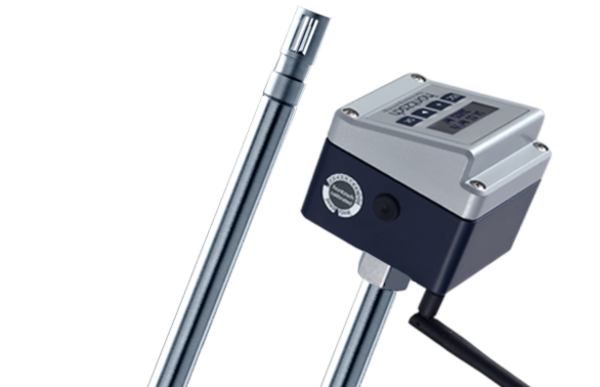
The Thermal Flow Sensor TA10 ZG2d operates based on the thermal heat transfer principle and is designed as a probe with an integrated transmitter for direct measurement of standard velocity, volumetric flow, mass flow, and temperature.
It allows easy switching between multiple gases such as air, nitrogen, methane, natural gas, argon, helium, hydrogen, and oxygen, even during operation, ensuring maximum flexibility.
With a high measurement dynamic range (up to 1:1000) and low measurement uncertainty of approx. 2%, the sensor delivers accurate results even at very low flow velocities.
The device features 2 analog outputs (4–20 mA), pulse/limit outputs, and modern communication interfaces such as WiFi and M-Bus, enabling advanced integration into monitoring systems.
Its robust stainless steel design, wide pressure range (up to 16 bar), and high protection rating (IP68) make it durable, stable, and even sterilizable. Optional features include an LCD display with keypad, WiFi module, and M-Bus interface.
Typical applications include compressed air and gas consumption measurement, leak detection, laminar flow monitoring in cleanrooms, burner supply air, exhaust air measurement, and HVAC systems.
Technical Specification
The measurement range is 0.2 to 200 m/s, ensuring precise measurement across a wide range of flow velocities.
The measurement accuracy is ±2% of measured value + 0.02 m/s (up to 40 m/s) and ±2.5% above, providing high reliability.
The sensor is suitable for media temperatures from −10 to +140 °C and ambient temperatures from −25 to +60 °C, allowing use in various environments.
It is designed for pressures up to 16 bar, with higher ranges available on request, making it suitable for industrial high-pressure applications.
The integrated transmitter housing (AS80, IP65) ensures safe and reliable operation, with optional LCD display for on-site monitoring.
Communication is possible via analog outputs, WiFi, and M-Bus, enabling flexible system integration.
The housing is made of stainless steel (1.4571/1.4404), glass, epoxy resin, and silicone, ensuring durability and chemical resistance.
An optional ATEX version (Zone 2 and 22) is available for hazardous environments.


